
Hydration & molecular hydrogen
What does the science really say about hydration?
There is a lot of information about water, hydration, minerals, alkalinity and hydrogen. Some claims are well supported, some are still being researched and others are often misunderstood. This page will help you separate them.
Written for anyone who has been told a great deal about water and would like to know which parts of it hold up.

How this works
A simpler way to understand your options.
Four simple steps to help you understand the evidence, explore the options and decide what makes sense for you.
01
Discover
See what different approaches to hydration actually do.
02
Understand
Learn where the evidence is strong and where questions remain.
03
Explore
Compare habits, water quality and hydration technologies.
04
Choose
Decide what makes sense for you.
02 · Why it matters
Hydration is about more than simply drinking more water.
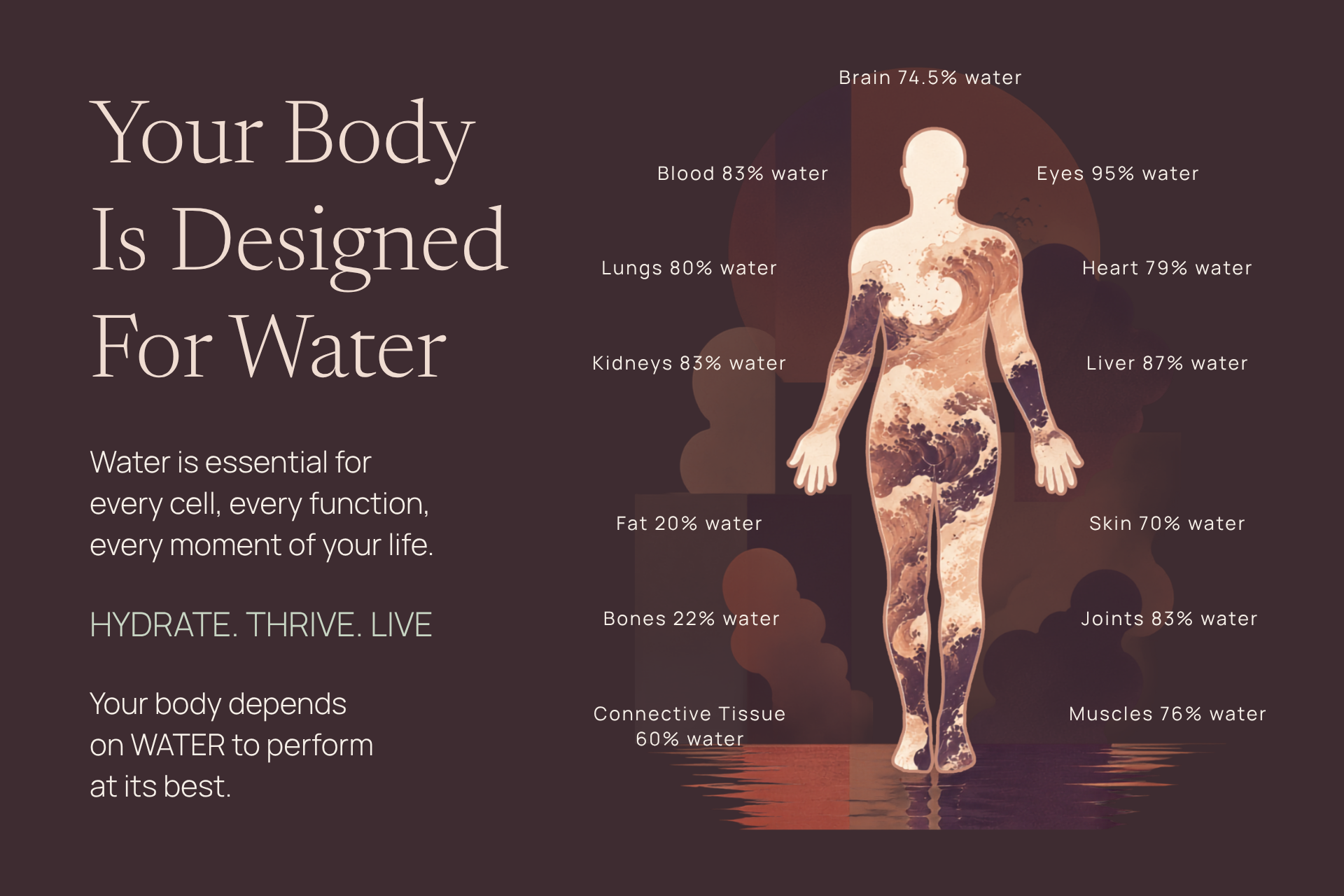
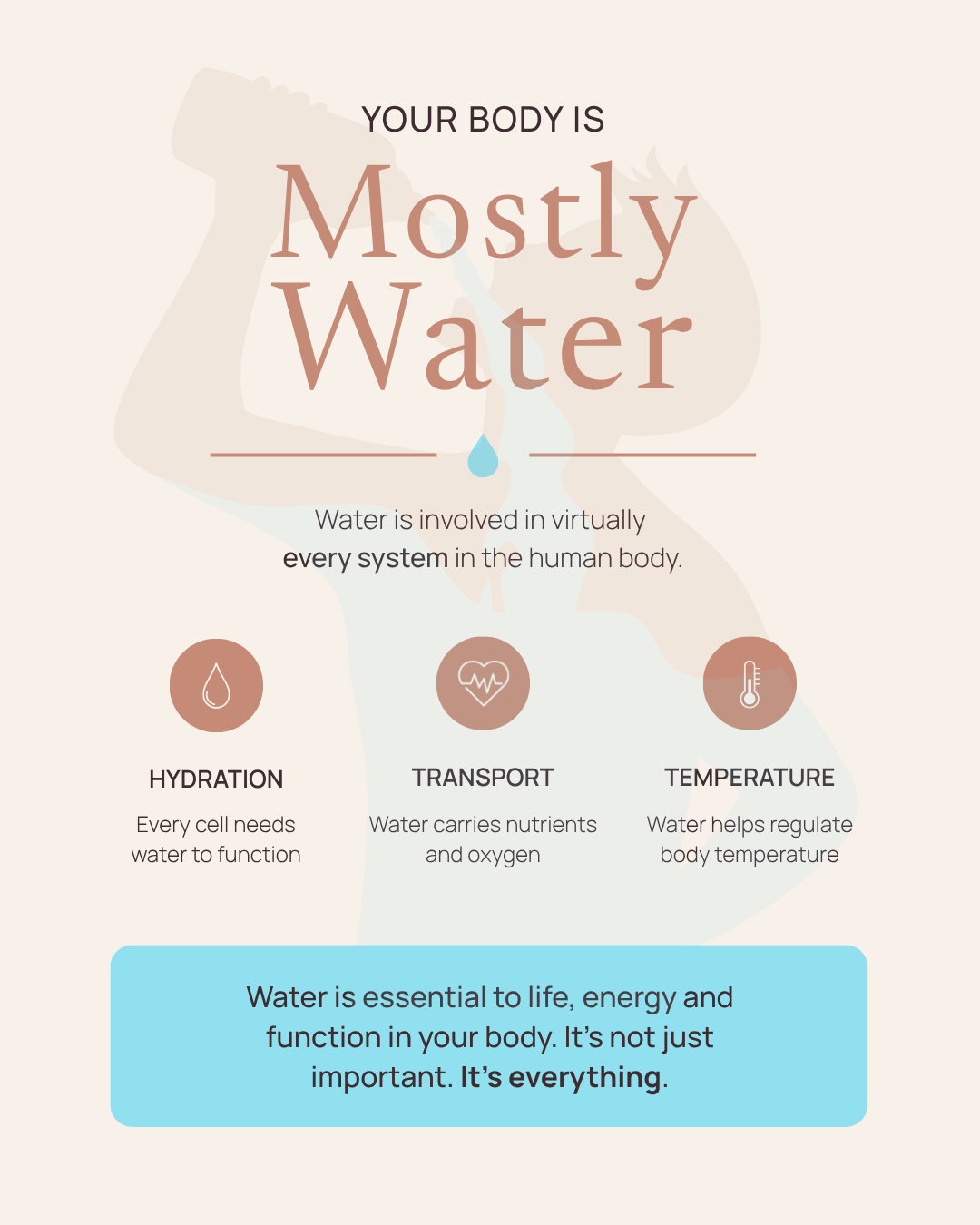
Water is not a nutrient you top up in isolation. It is the medium every other process runs in. Blood volume, temperature regulation, joint lubrication, the transport of nutrients and the removal of waste through the kidneys all depend on fluid balance. This part is not contested. It is ordinary physiology, taught in every medical school.
Two practical consequences follow. Thirst arrives after a deficit has already started, so it is a lagging signal rather than an early one. And because the effects are systemic rather than local, mild shortfalls tend to show up as something vague, tiredness, a headache, poorer concentration, rather than as thirst.
03 · What the evidence says
Not every hydration claim is backed by the same level of evidence.
Established
Everyday hydration
Strong evidence supports the importance of adequate fluid intake for normal body function.
Early
Molecular hydrogen
An emerging area of research with a growing body of published studies.
Often overstated
Alkalinity and blood pH
Your body tightly regulates blood pH. Drinking alkaline water should not be presented as a way of changing blood pH.
04 · The options
Three areas worth paying attention to.
Daily habits
How much you drink, what you eat, activity, climate and lifestyle all influence hydration.
Water quality
What is in your water can vary considerably depending on source, treatment and location.
Hydrogen technology
Some water technologies are designed to produce dissolved molecular hydrogen, an area now being studied for potential biological effects.
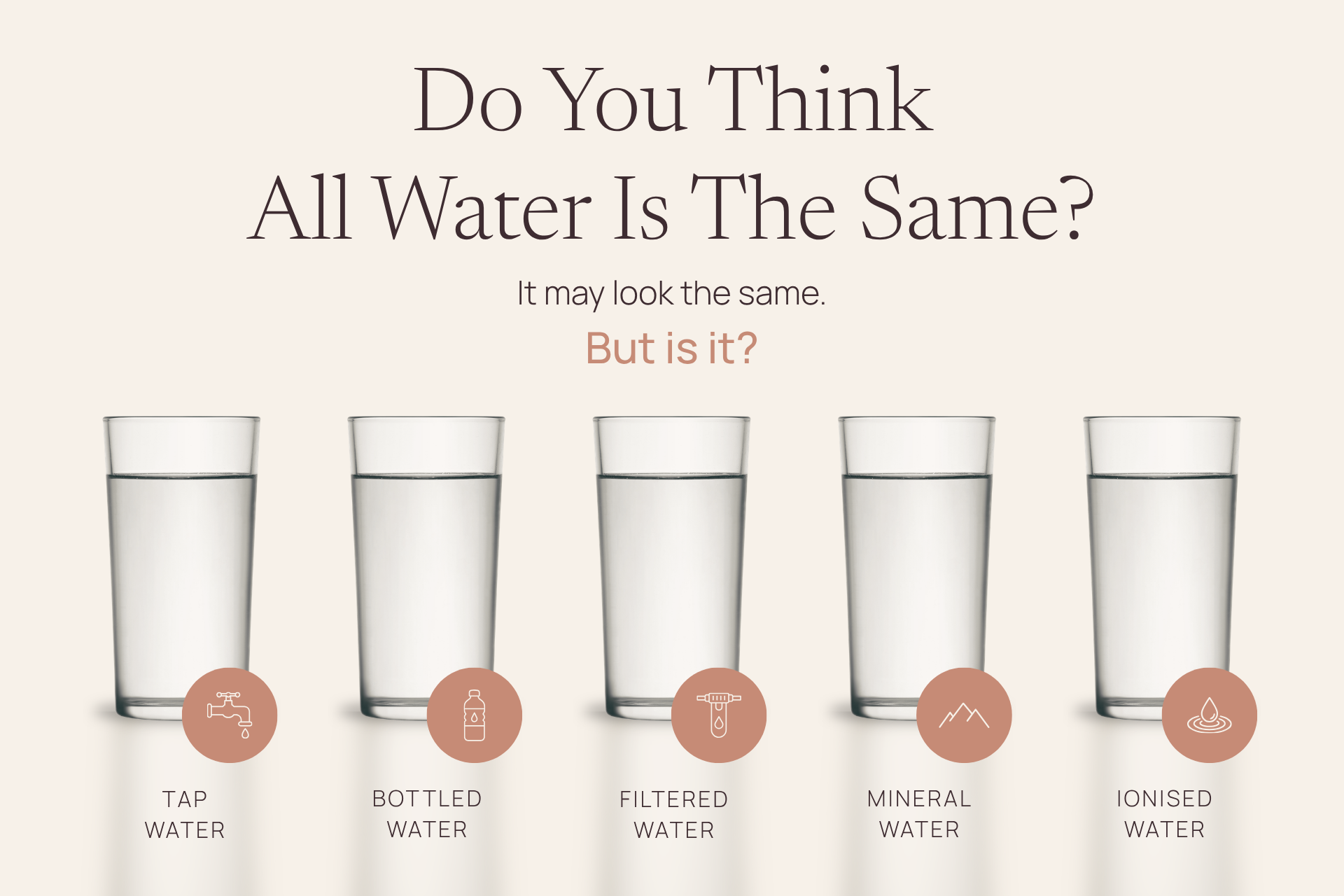
Not all water technologies do the same job.
Water treatment can involve very different processes and understanding the difference matters.
Filtration
Designed to reduce specific contaminants or unwanted substances from water. The effectiveness depends on the filter media used and what it has actually been tested to remove.
Reverse Osmosis
Uses a membrane to remove a very wide range of dissolved substances from water. In doing so, it can also remove naturally occurring minerals. Some systems therefore include a remineralisation stage.
Water Ionisation
Uses electrolysis to produce waters with different properties and applications. The quality of the technology, internal materials and source water all matter.
Molecular Hydrogen Technology
Designed to produce dissolved molecular hydrogen in water. How that hydrogen is generated, the materials involved and the engineering of the system can vary significantly between technologies.
The important question is not simply, "What type of water is this?" It is, "What is the technology actually doing to the water?
05 · The limits
Not all water ionisers and molecular hydrogen technologies are the same.
The technology used to produce molecular hydrogen matters.
Different systems use different internal components, materials and methods and they are not all manufactured to the same standard. Understanding how molecular hydrogen is produced, what materials come into contact with the water and how the technology has been designed is an important part of making an informed decision.
This is one of the areas we help people understand.
Interested in exploring it further? Talk to your Medistic Health Consultant.
Have questions about your water or hydration?
The information on this page is for education only. It is not medical advice and it is not a diagnosis or a treatment. Always speak to your doctor before changing anything about your care and never stop prescribed medication without medical guidance.