
Movement and strength
The most evidence, the least marketing.
Movement is the closest thing this field has to a general intervention, and it is free, which is precisely why nobody is spending money to tell you about it. This page sets out what is firmly established, where the fitness industry runs well ahead of its evidence, and the small number of things that matter most if you are starting from very little.
Written for anyone who knows they should be doing this, has been made to feel it requires a gym and a personality, and would like the honest minimum.
Strongest evidence
Of everything on this site, this has the most behind it.
Least marketing
Which is exactly why it gets the least attention.
No gym required
Twice a week, plus walking, is most of the benefit.
01 · The problem
Written for people who already train.
Almost all exercise guidance assumes you already know what a set is, own the shoes, and are choosing between good options. The people with the most to gain from moving more are the ones that guidance speaks to least, and being spoken past is a very effective way of being put off.
The second problem is the all-or-nothing framing. A programme is presented, it requires four sessions a week, week three goes badly, and the whole thing is abandoned rather than reduced. Almost nothing in the research supports that framing. The large differences are between nothing and something, not between good and optimal.
Who is writing this
The least sold, the best evidenced.
This is the part of the field with the most evidence behind it and the least money in it, which is exactly why it gets the least attention. We would rather tell you the boring minimum that works than sell you an identity.
We are not doctors or physiotherapists and we do not pretend to be. What we can do is separate what has been tested in people from what has been assumed, say how large and how long the studies were, and tell you plainly where the evidence stops. Where something is genuinely unresolved, we say so rather than picking a side.
How this works
Discover. Understand. Explore. Choose.
The same four steps on every page of this site, in that order. You are somewhere in the middle of them right now.
01
Discover
Find out the question is more interesting than you were told.
02
Understand
See what the evidence supports, and where it runs out.
03
Explore
Ask the person who sent you here to walk you through it.
04
Choose
Decide for yourself, with no pressure and no deadline.
02 · Why it matters
Strength is the thing you lose quietly.
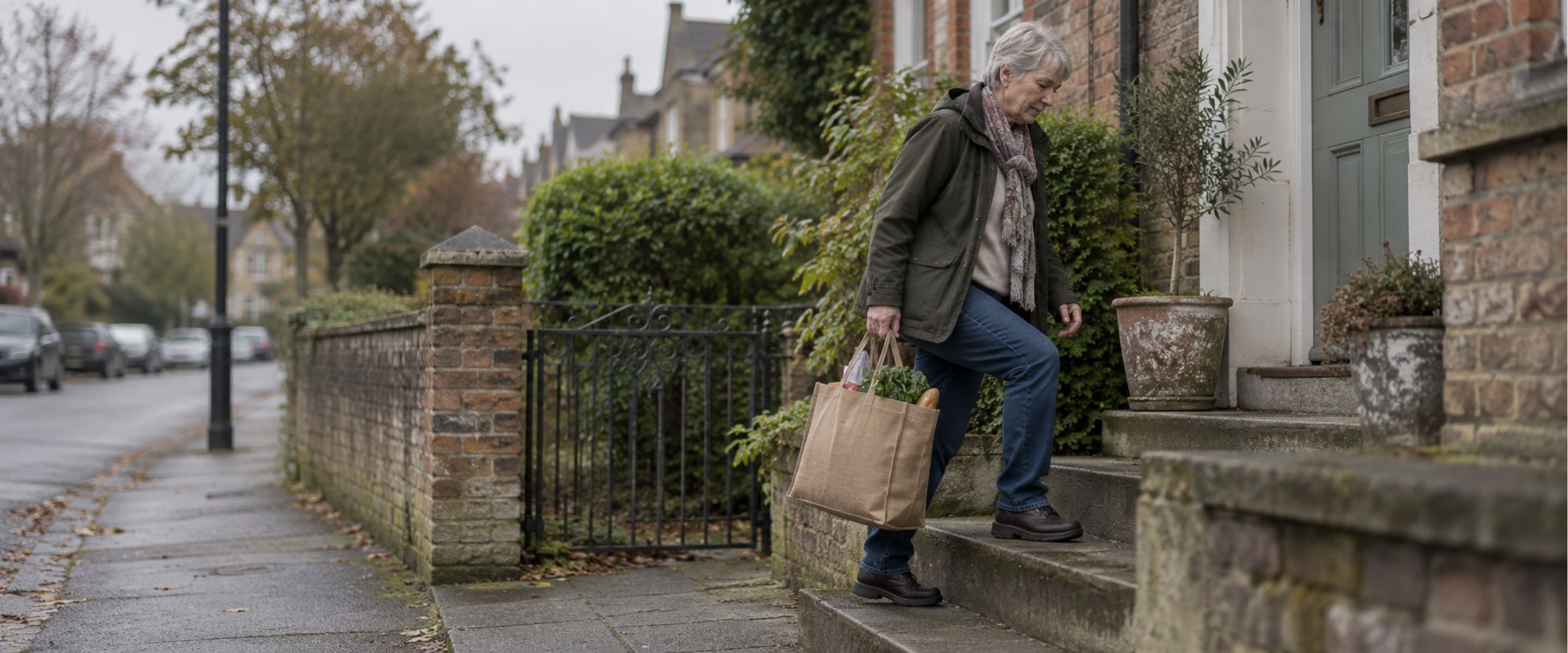
Muscle mass and power decline gradually from midlife, and the decline is invisible until an ordinary task stops being ordinary. Getting off the floor, carrying shopping up a flight of stairs, catching yourself when you trip. Nobody notices the year it changed, because it did not change in a year.
Movement also does not stay in its own category. It shows up in how you sleep, how your body handles glucose, bone density, mood and balance. That is a large part of why it is the most consistently supported single thing in population health, and why almost every other page on this site ends up pointing back at it.
03 · What the evidence says
Three claims, three very different standards of proof.
Established
Being active, and keeping strength
The association between regular physical activity and long-term health is among the largest and most replicated findings in population health. Resistance training preserves muscle and supports bone into later life, including in people starting in their seventies and eighties. Supervised exercise is a standard component of cardiac and pulmonary rehabilitation. None of this is contested.
Mixed
Optimal doses, zones and protocols
Whether a particular training zone, interval structure or step count is best are real research questions with genuinely mixed answers, and the differences between reasonable approaches are modest. The arguments are conducted with a heat that the size of the effects does not justify. The gap between a good programme and a perfect one is far smaller than the gap between nothing and something.
Often overstated
Supplements, gadgets and correction culture
Most sports supplements do very little for someone who is not already training seriously. Static stretching before exercise has not been shown to prevent injury in the way it is still widely taught. And an industry has grown around identifying faults in how you stand and move, where the evidence linking those findings to pain is far weaker than the confidence of the assessment implies.
This is an area of active research. Some of the studies referenced here are early, small, or conducted in laboratory or animal models rather than in people. We have said so wherever that is the case.
04 · The options
Three routes, in rough order of how much evidence sits behind them. The first two together cover most of what the research supports, and neither requires a membership.
Walking, most days
Unglamorous, free, and the single easiest thing to make permanent because it attaches to things you already do. Attached to a commute, a dog or a phone call it stops being an activity you have to remember and becomes the shape of a day.
What it will not do: preserve strength on its own.
Something heavy, twice a week
Loading the muscles against resistance, whether that is weights, bands, bodyweight or carrying things. This is the part that specifically addresses what is lost with age, and it is the part most commonly skipped in favour of more walking, which does not substitute for it.
What it will not do: hold on to the gains once you stop.
A few sessions with a person
If you are starting from nothing or coming back from an injury, a small number of sessions with a qualified coach or physiotherapist buys confidence more than technique. Knowing you are not doing something foolish is the thing that keeps people going past week three.
What it will not do: substitute for turning up week after week.
05 · The limits
When to stop and ask someone.
Chest pain, unusual breathlessness, dizziness or palpitations during exertion are reasons to see a doctor rather than to push through. If you have heart disease, are pregnant, are recovering from surgery or an injury, or have a condition that affects balance, get individual advice before starting something new. Sharp or persistent pain is information rather than weakness.
There is also a version of this that stops being healthy. If movement has become something you feel you have to do to earn food or rest, or missing a session produces real distress, that is worth talking to someone about. Exercise as punishment is not what this page is describing and it is not what the research is measuring.
Nothing described here treats, prevents or cures any condition. Movement improves a great many things and guarantees none of them.
What is at stake
Nobody notices until something ordinary gets hard.
If you understand it
You do the modest amount that actually holds up over decades, without a gym membership or an identity attached, and you start before you need to.
If you do not
Strength is lost slowly enough that nobody notices, and the cost arrives all at once, years later, as something ordinary becoming difficult.
Keep reading
There is no rush, and nothing to sign up for.
If this was useful, these three are the natural next reads. Everything is free and nothing asks for your name.
Talk to your consultant to learn more.
The information on this page is for education only. It is not medical advice, and it is not a diagnosis or a treatment. Always speak to your doctor before changing anything about your care, and never stop prescribed medication without medical guidance.