
Nutrition and the everyday home
The choices you repeat, not the ones you agonise over.
Nutrition arrives as a fight between camps. Household products arrive wrapped in worry. Both make the same mistake, which is treating one decision as though it carries the weight of a whole life. This page is about the accumulated ordinary choices of a household: what the evidence supports, where it is thinner than the packaging suggests, and which parts genuinely do not matter much.
Written for anyone who has been told what to cut out so many times that they have stopped listening, and would rather understand the pattern than follow another rule.
Judge the week
Not the meal, and not the single ingredient.
The whole household
Food, water and what you clean with, together.
Never here
Chemical free, toxic overload, or a villain of the month.
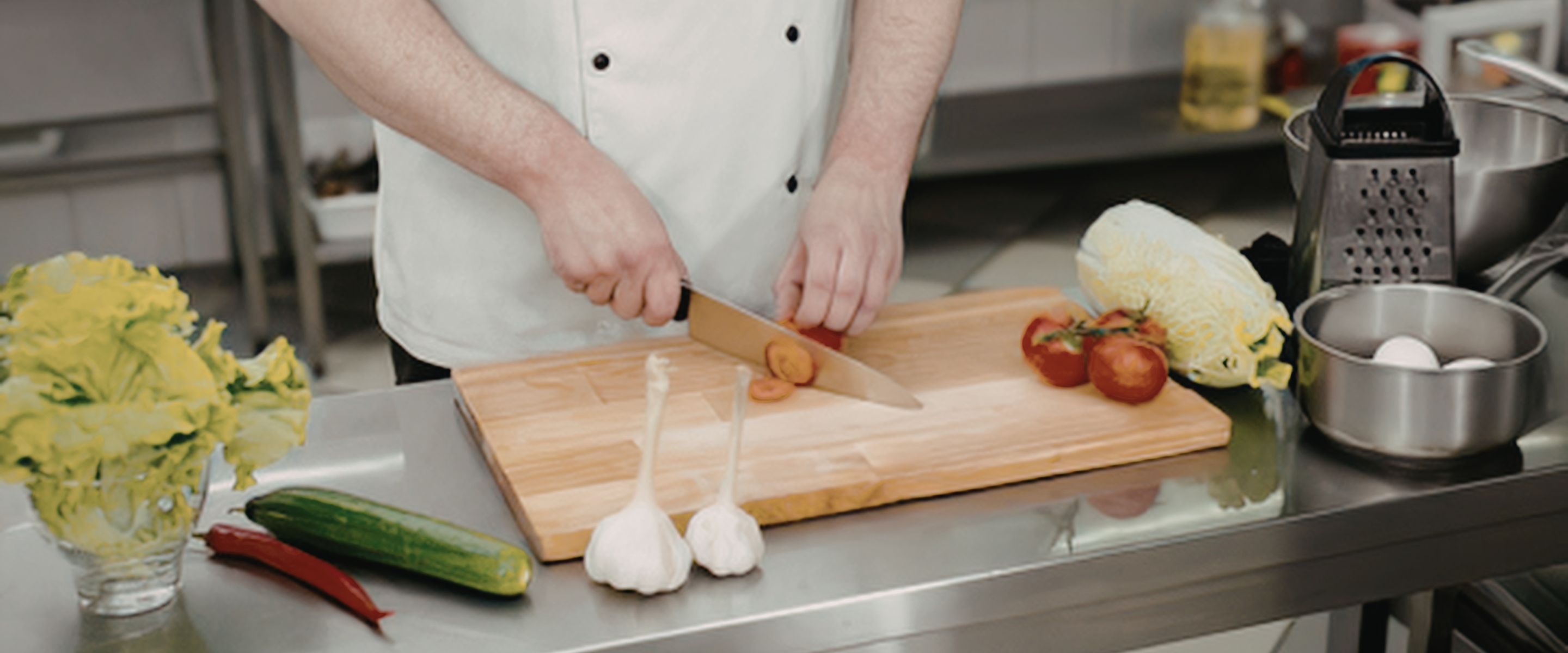
01 · The problem
Two aisles, both shouting.
In the food aisle every position has a confident advocate and they contradict each other. In the cleaning aisle the selling is done with worry instead: the implication that your home is working against you and that the answer is a different bottle. Neither aisle is trying to help you think.
What almost nobody discusses is that these are the same decision. Food, water, cleaning, laundry, cookware and the air indoors are all bought by the same person on the same afternoon, and together they make up most of what a household is actually exposed to. Treated separately they are a series of small worries. Treated together they are a pattern you can adjust.
Who is writing this
We followed the rules too.
We have followed the rules, cut out the villain of the month, and ended up no clearer than when we started. What changed things was looking at the week rather than the meal, and at what the research can actually support.
We are not doctors or dietitians and we do not pretend to be. What we can do is separate what has been tested in people from what has been tested in a dish, say how large and how long the studies were, and tell you plainly where the evidence stops. Where something is genuinely unresolved, we say so rather than picking a side.
How this works
Discover. Understand. Explore. Choose.
The same four steps on every page of this site, in that order. You are somewhere in the middle of them right now.
01
Discover
Find out the question is more interesting than you were told.
02
Understand
See what the evidence supports, and where it runs out.
03
Explore
Ask the person who sent you here to walk you through it.
04
Choose
Decide for yourself, with no pressure and no deadline.
02 · Why it matters
A household is a pattern, repeated.
What gets bought on a Thursday becomes what everyone eats for a week. Nothing about a single meal matters much, which is exactly why the weekly pattern matters a great deal. The research that holds up is almost all about patterns over years, not about individual foods over days, and that is a more forgiving standard than most nutrition talk implies.
There is also a quieter point. Whoever does the shopping is making decisions on behalf of everyone in the house, including children and older relatives who did not choose and will not comment. That is worth knowing without being made anxious about it, because anxiety is the one thing that reliably makes these decisions worse.
03 · What the evidence says
Three claims, three very different standards of proof.
Established
The overall pattern of eating
Patterns built around vegetables, fruit, legumes, whole grains, nuts and fish, with less heavily processed food, are the most consistently supported finding in nutrition research across decades and many countries. Notably the finding is about the pattern rather than any single component of it. Ventilating while cooking sits here too, since indoor air from combustion is among the best evidenced exposures in a home.
Mixed
Single nutrients, water treatment and cookware
Isolating a nutrient that looked good in a whole food and testing it on its own has a long history of disappointing results, which is itself informative. Water filtration is not one question but many, because the right answer depends entirely on what is in your particular supply. Research has investigated cookware materials and coatings with findings that vary by material, temperature and condition, and the honest summary is that it depends.
Often overstated
Cleanse claims, superfoods and worry marketing
No food, drink or programme clears toxins from a body. The liver and kidneys do that continuously and are not waiting for a juice. Superfood is a marketing category rather than a scientific one. And any product line whose main argument is that your household is dangerous is selling you the worry and then the solution. Natural is not automatically safe, and synthetic is not automatically harmful. Both are judged on evidence, formulation and appropriate use.
This is an area of active research. Some of the studies referenced here are early, small, or conducted in laboratory or animal models rather than in people. We have said so wherever that is the case.
04 · The options
Three routes, in rough order of how much evidence sits behind them. None of them requires you to overhaul anything, and the first one is deliberately unspecific, because a page that hands out numbers to strangers is not being careful.
The weekly pattern
More plants and more fibre across a normal week, and less of the heavily processed end of the shelf. What is in the house is what gets eaten, so the decision is really made in the shop rather than at the table. Aim at the pattern and let individual meals be whatever they are.
What it will not do: substitute for dietary management of a diagnosed condition.
Find out before you fix
Your water supplier publishes what is in your water, and a well can be tested. Read that before buying a filter, because filters are specific and buying the wrong one is the most common mistake in this category. Open a window when you cook, which costs nothing and addresses something well evidenced.
What it will not do: solve a supply problem you have not identified.
Gentler everyday choices
Simpler formulations, fewer unnecessary additives, and fewer products doing jobs that one product already does. This is about reducing unnecessary exposure rather than eliminating it, and it works best as a slow replacement as things run out rather than as a cupboard clear-out.
What it will not do: remove exposure. Everything is made of chemicals, water included.
05 · The limits
Where a general page has to stop.
This page is written for a general audience and deliberately gives no numbers, targets or plans. If you are managing diabetes, coeliac disease, kidney disease, a food allergy, pregnancy or any condition where diet is part of treatment, the right source is a dietitian or your doctor, who can account for the rest of your situation. Supplements are not a substitute for a pattern of eating, and several interact with prescribed medication.
If food has started to feel like a source of control or anxiety rather than something you eat, that is worth talking to someone about, and this page is not the right help. There is no version of eating well that should make you feel worse.
We are also not going to tell you your household is dangerous, because we do not believe it and because worry is a poor basis for a decision that is really about slow, ordinary substitution. Nothing described here treats, prevents or cures any condition.
What is at stake
Small choices, made a thousand times.
If you understand it
You judge your week rather than your last meal, spend your attention where the evidence is strongest, and stop being moved by whichever ingredient is being blamed this year.
If you do not
Another decade of eliminating whichever ingredient is currently unpopular, spending on the wrong end of the shop, and never being sure any of it made a difference.
Keep reading
There is no rush, and nothing to sign up for.
If this was useful, these three are the natural next reads. Everything is free and nothing asks for your name.
Talk to your consultant to learn more.
The information on this page is for education only. It is not medical advice, and it is not a diagnosis or a treatment. Always speak to your doctor before changing anything about your care, and never stop prescribed medication without medical guidance.